// INTRO
I've always considered myself a healthy person. I run. I cycle. I eat reasonably well. Then I got a blood test and saw 10 out of 15 heart biomarkers flagged red. This is the story of what I found, what I changed, and the results 7 months later.
I've always considered myself a healthy person.
I run. I cycle. I eat reasonably well. I don't smoke. By most standards, I'm doing fine.
At least, that's what I told myself.
The truth is, like a lot of founders, I'd been coasting on the fact that I wasn't visibly unhealthy. I wasn't overweight. I didn't have any obvious problems. So I assumed everything under the hood was working fine too.
I was wrong.
The Wake-Up Call I Didn't Know I Needed
I'd always been fairly athletic, played sports growing up, stayed active through college. But the reality is that my health was more of an afterthought.
But this year I turned 38 and it all sort of hit me.
My dad had a heart attack at 55. His dad had one too around a similar age.
That's not ancient history, that's potentially 17 years away for me if I didn't do something about it now.
My family history was starting to feel less like a distant concern and more like a ticking clock.
So I signed up for a Function Health blood test. (I was influenced... ha their marketing worked)
The Test That Changed Everything
The process itself was easy. $499 for two tests per year. Blood draw at Quest Diagnostics. Painless.
The hard part was waiting for results.
There's this weird psychological thing that happens when you're waiting for medical information. You prepare yourself for the worst. You imagine all the bad scenarios. But until the results are actually in front of you, your brain doesn't know how to process it. You're just... suspended.
When my results came back and I opened my heart health panel, I saw a wall of red.
10 out of 15 heart biomarkers were flagged.
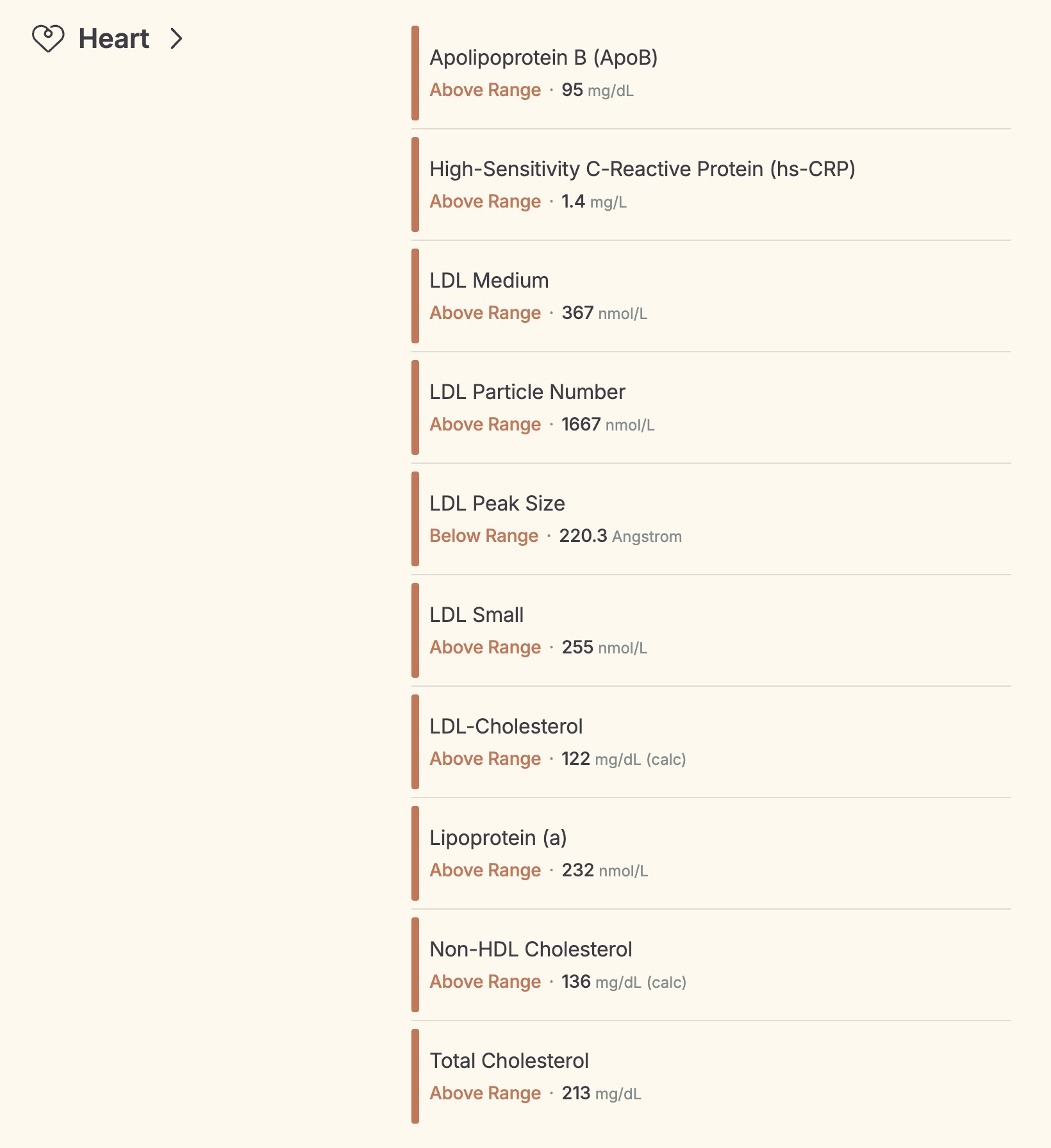
| Biomarker | Value | Status |
|---|---|---|
| Apolipoprotein B (ApoB) | 95 mg/dL | Above Range |
| High-Sensitivity C-Reactive Protein (hs-CRP) | 1.4 mg/L | Above Range |
| LDL Cholesterol | 122 mg/dL | Above Range |
| LDL Particle Number | 1667 nmol/L | Above Range |
| Lipoprotein (a) | 232 nmol/L | Above Range |
| Total Cholesterol | 213 mg/dL | Above Range |
And it kept going.
I sat there staring at my screen, and I immediately had an uneasy feeling.
I was 37 years old. I considered myself healthy, and even though this stuff was in the back of my mind, seeing it written down on paper in front of me was a feeling I wasn't prepared for.
My heart panel looked like a giant flashing warning sign.
The Problem: I Had No Idea What Any of This Meant
Here's the thing about getting comprehensive blood work: you get a lot of data.
Function Health gave me over 100 biomarkers.
- •Detailed explanations
- •Ranges
- •Comparisons
It was genuinely impressive but also very overwhelming.
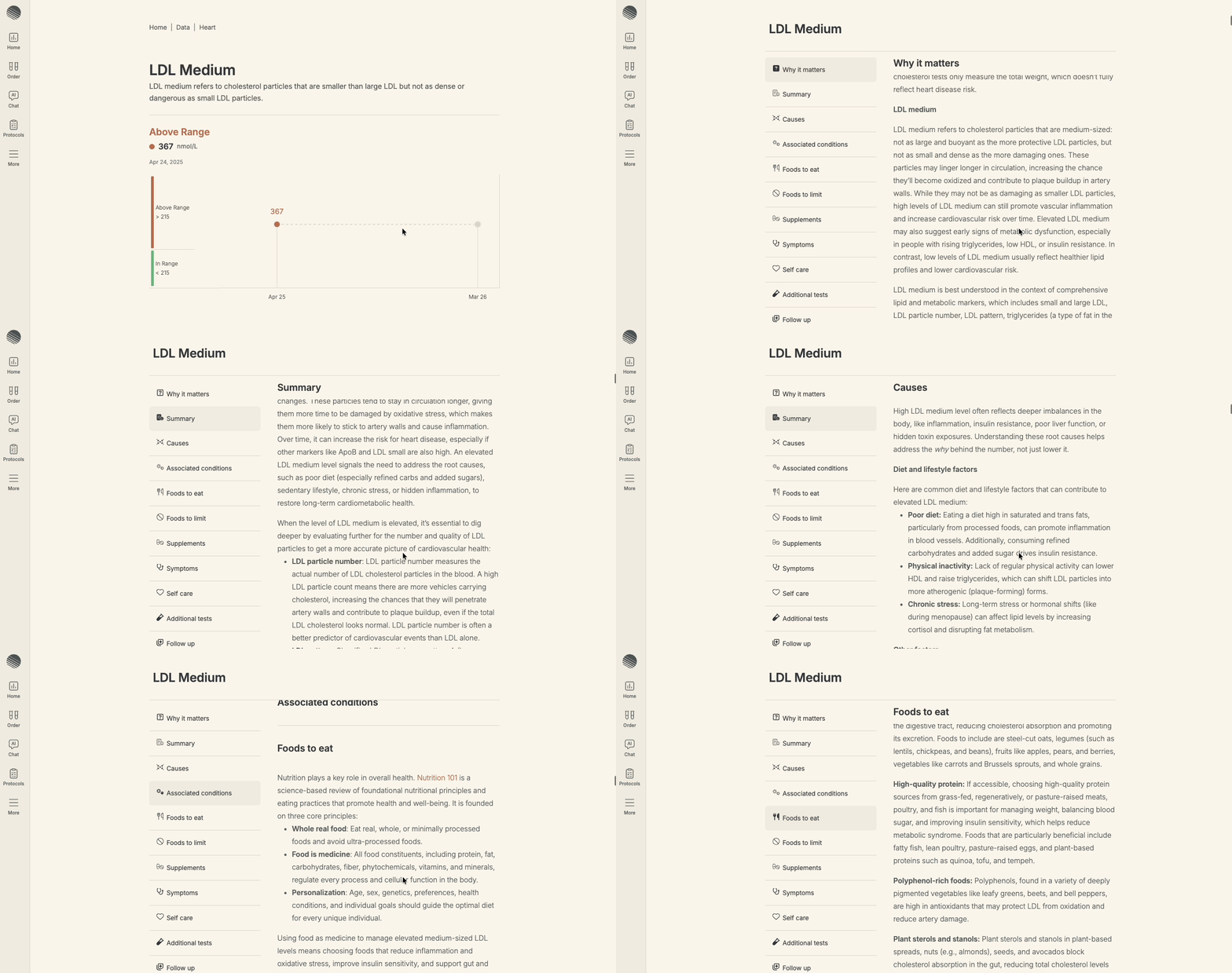
And I had no idea what to actually do with any of it.
- •What's the difference between LDL cholesterol and LDL particle number?
- •Why does ApoB matter more than total cholesterol?
- •What the hell is Lipoprotein (a) and why is mine so high?
- •Should I be on a statin?
- •Am I going to have a heart attack?
I'd gone from blissful ignorance to information overload, and I wasn't sure which was worse.
So I did what any reasonable person would do in 2025: I uploaded all my screenshots to ChatGPT and started asking questions.
What AI Taught Me About My Own Body
A few hours talking to an AI about my blood work taught me more than any doctor's visit ever had.
Turns out, ApoB is a better predictor of cardiovascular risk than LDL cholesterol.
My Lipoprotein (a) at 232? Genetic. Inherited. There's almost nothing I can do about it through lifestyle.
hs-CRP is an inflammation marker, and inflammation drives heart disease. This one I could actually fix.
The pattern became clear: some things were in my control, some weren't. But knowing which was which meant I finally had something to work with. I wasn't guessing anymore and could start to build a plan.
Going Deeper: The Tests That Gave Me Peace of Mind
My blood work was a wake-up call and it was time to start taking things more seriously with my health. I transitioned from a reactive approach to a proactive approach.
Based on my horrible heart panel and family history, this was the area I needed to focus on first. I decided to get a CAC Scan completed.
Coronary Artery Calcium (CAC) Scan
What it is: A CT scan of your heart that measures calcium buildup in your arteries. Calcium deposits indicate plaque formation, which causes heart attacks.
A score of 0 means no detectable buildup. The higher the score, the more plaque present. It's one of the best ways to see if heart disease has actually started, not just whether you're at risk for it.
- •My Results: Total Calcium Score of 0. All five major arteries clear. (This brought a smile to my face)
- •What I learned: Despite scary blood work and family history, no plaque buildup yet. The genetics had loaded the gun, but lifestyle hadn't pulled the trigger. I still had time.
But this wasn't a green light to keep doing what I'd been doing. It was a wake-up call to get serious before I did real damage. I'd been given a head start. I didn't want to waste it.
Time to Make a Plan: What I Actually Changed
Armed with data, I focused on four areas: diet, exercise, sleep, and supplements. Nothing revolutionary, just consistent, targeted changes based on what my blood work told me I needed to fix.
Diet
- •Focused on whole foods
- •Stopped eating 2-3 hours before bed (this is hard and usually it's only 2)
- •Increased water intake significantly
- •Aimed for 1g of protein per lb of muscle
- •Started intermittent fasting most days
Honestly, this part was easy for me. I wasn't eating terribly before, I just wasn't eating strategically. The protein focus was specifically for building muscle mass (which I was lacking), and cutting food before bed made a noticeable difference in sleep quality.
Exercise
- •Added weight training: Kettlebell workouts 3x per week
- •Maintained cardio but stopped treating it as my only exercise
- •Got a walking treadmill for my desk (Averaged 11k steps a day last year)
- •Added a stretching routine
This was the big shift. I'd been a cardio-only guy for years: running, cycling, more running. My DEXA scan showed it: low muscle mass, elevated cortisol, tanked testosterone. Adding resistance training 3x per week was probably the single highest-impact change I made. My body finally had a reason to build muscle and produce more testosterone.
Sleep
- •Magnesium glycinate before bed
- •No screens before sleep (well let's say reduced screens)
- •Cooler bedroom temperature
Sleep is where recovery happens. Testosterone is produced while you sleep. Inflammation gets processed while you sleep. I'd been treating sleep as optional for years, just something that happened between work.
Supplements: Building a Stack Based on Data, Not Guessing
This is where most people get it wrong, including me before I had blood work done.
I used to take supplements the way most people do: grab a multivitamin, maybe some fish oil, and vitamin D. No strategy, just Google it and go from there.
Once I had my biomarker data, everything changed. I could see exactly what was off and target those specific issues.
The key insight: supplements should fill gaps that your blood work reveals.
Here's what I built, organized by what I was trying to fix:
I will admit I went overboard... but for me it's part of the fun of this entire thing.
For Heart Health / Cholesterol
| Supplement | Dosage | Purpose |
|---|---|---|
| Omega-3 Fish Oil | 2,000mg EPA+DHA, 2x daily | Cholesterol, inflammation |
| Berberine | 500mg, 2x daily | Lower ApoB and LDL |
| Red Yeast Rice | 1,200mg | Natural statin alternative |
| Niacin | 250-500mg, 2x daily | Raise HDL |
| CoQ10 | 200mg | Heart health, cellular energy |
| Psyllium Fiber | 5g | Binds cholesterol |
| Boswellia | 500mg, 2x daily | Inflammation/hs-CRP |
| Vitamin K2 | 120mcg | Prevents arterial calcification |
For Testosterone
| Supplement | Dosage | Purpose |
|---|---|---|
| Vitamin D3 | 4,000 IU | Hormone support |
| Zinc Citrate | 20-30mg | Testosterone, immunity |
| Ashwagandha | 300-600mg | Stress, hormone balance |
| DIM | 200-300mg | Estrogen metabolism |
| Magnesium Glycinate | 300-400mg | Sleep, recovery |
My Complete Supplement Protocol
In order to help me track and understand my complete supplement protocol I built this tool
You can check it out and see my complete list of Supplements & Vitamins.
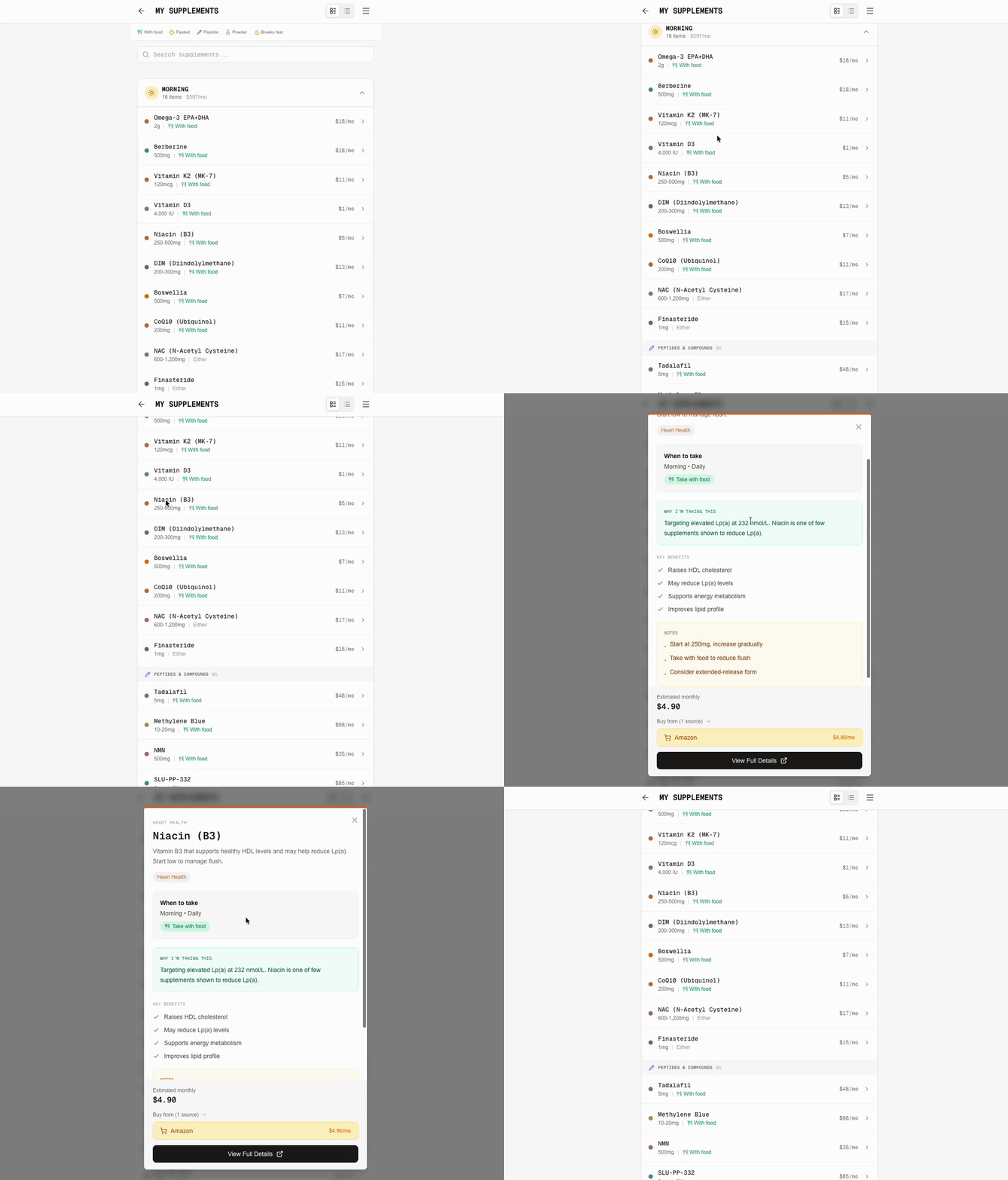
It shows how much I take and why I take it. I've also included my latest bloodwork test results, which you can click through to review.
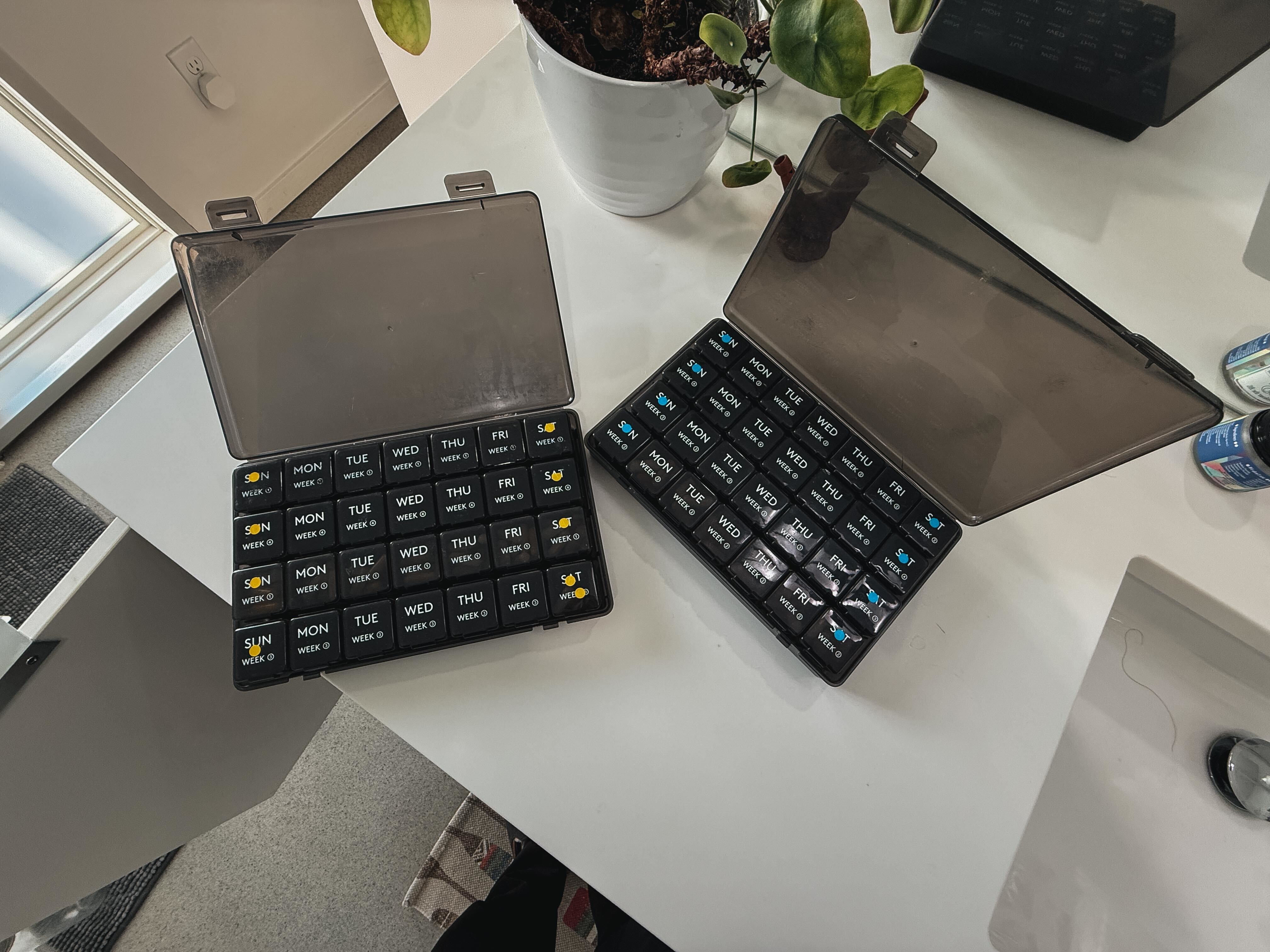
When I prepare my vitamins I put together 4 weeks at a time and having this tool makes it quick and easy.
Morning
| Supplement | Dosage | Why I Take It |
|---|---|---|
| Omega-3 Fish Oil | 2,000mg EPA+DHA | Cholesterol, inflammation, brain |
| Berberine | 500mg | Lower ApoB, LDL-P |
| Vitamin D3 | 4,000 IU | Hormones, testosterone, immunity |
| Vitamin K2 (MK-7) | 120mcg | Prevents arterial calcification |
| CoQ10 | 200mg | Heart health, cellular energy |
| NAC | 600-1,200mg | Liver detox, antioxidant |
| DIM | 200-300mg | Estrogen metabolism |
| Niacin | 250-500mg | Raise HDL |
| Boswellia | 500mg | Anti-inflammatory for hs-CRP |
Optional morning additions:
| Supplement | Dosage | Why I Take It |
|---|---|---|
| Vitamin B12 | 1,000mcg | Energy, nervous system |
| L-Theanine | 100-200mg | Focus, calm |
| Lutein | 10-20mg | Eye health |
| Biotin | 5,000-10,000mcg | Hair, skin, nails |
Evening
| Supplement | Dosage | Why I Take It |
|---|---|---|
| Omega-3 Fish Oil | 2,000mg EPA+DHA | Cholesterol, inflammation (2nd dose) |
| Berberine | 500mg | Lower ApoB, LDL-P (2nd dose) |
| Red Yeast Rice | 1,200mg | Lower LDL-C, natural statin alternative |
| Turmeric/Curcumin | 1,000mg | Inflammation, joints |
| Zinc Citrate | 20-30mg | Testosterone, immunity |
| Ashwagandha | 300-600mg | Stress, hormone balance |
| Niacin | 250-500mg | Raise HDL (2nd dose) |
| Boswellia | 500mg | Anti-inflammatory (2nd dose) |
Optional evening addition:
| Supplement | Dosage | Why I Take It |
|---|---|---|
| Alpha Lipoic Acid | 300-600mg | Antioxidant, insulin sensitivity |
Before Bed (2-3 hours after dinner)
| Supplement | Dosage | Why I Take It |
|---|---|---|
| Magnesium Glycinate | 300-400mg | Sleep, recovery, muscles |
Evening Drink Mix
| Ingredient | Dosage | Why I Take It |
|---|---|---|
| Creatine Monohydrate | 5g | Strength, recovery, cognitive |
| L-Citrulline Malate | 6-8g | Blood flow, nitric oxide |
| Psyllium Fiber | 5g | Fiber, binds cholesterol |
| Greens Powder | 1 scoop | Micronutrients |
| Collagen Powder | 10-20g | Joints, skin, gut (optional) |
The Results: 7 Months Later
Seven months of sticking to the plan (most of the time) and it was time to ask the question...
Was any of it actually working?
I'd felt better. More energy, sleeping deeper, recovered faster from workouts. But feelings aren't data. The whole point of this journey was to stop guessing and start measuring.
So I got retested.
I'll be honest: part of me was nervous.
What if nothing had changed? What if my genetics were just too strong? What if I'd spent all this time and money on supplements that didn't move the needle?
I opened my results.
Heart Biomarkers
| Biomarker | Before | After | Change |
|---|---|---|---|
| ApoB | 95 mg/dL (High) | 74 mg/dL (Normal) | -22% |
| LDL Cholesterol | 122 mg/dL (High) | 81 mg/dL (Normal) | -34% |
| Total Cholesterol | 213 mg/dL (High) | 149 mg/dL (Optimal) | -30% |
| Non-HDL Cholesterol | 136 mg/dL (High) | 94 mg/dL (Optimal) | -31% |
Every single risk ratio (Atherogenic Index, Castelli Risk Index, LDL/HDL ratio) went from concerning to optimal.
Testosterone
| Biomarker | Before | After | Change |
|---|---|---|---|
| Total Testosterone | 320 ng/dL | 634 ng/dL | +98% |
| Free Testosterone | 63.7 pg/mL | 156.9 pg/mL (Optimal) | +146% |
I nearly doubled my testosterone. More than doubled my free testosterone.
Naturally. No TRT. Just diet, exercise, sleep, and proper supplementation.
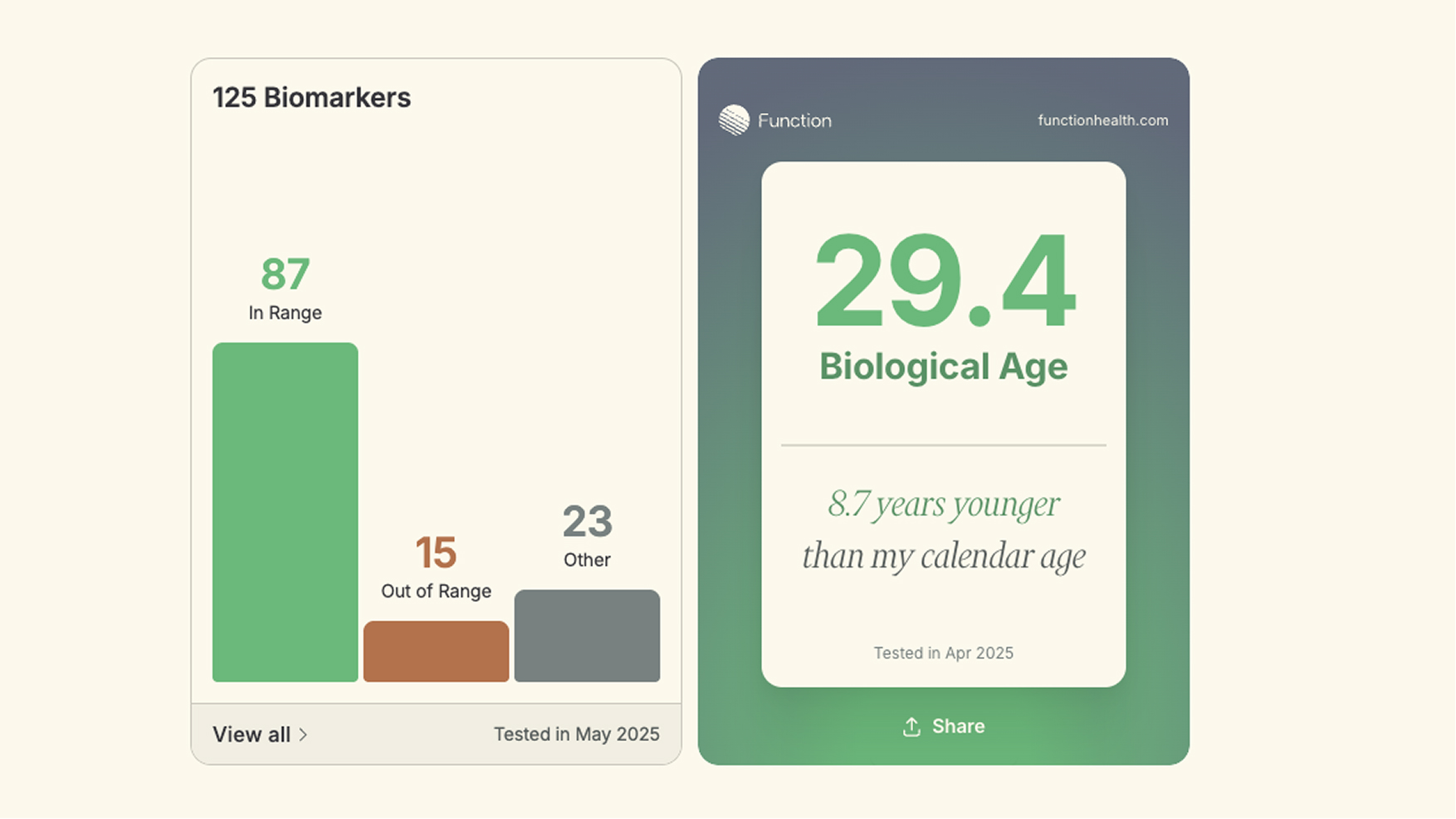
And my biological age was 29.4 years old, over 8 years younger than my actual age.
This felt like a really big win for me.
- •Chronological age: 37
- •Biological age: 29.4
The Realization I Had During All of This
I have the time and resources to deep-dive into research. I can afford multiple tests and supplements. And it still took me way too long to figure out what I was looking at and what to do about it.
What about everyone else?
The Apple Watch taught millions of people to care about their daily steps and active calories. It made those numbers visible and understandable. You didn't need to be a fitness expert to know that 10,000 steps was good.
But biomarkers?
Most people have no idea what their ApoB is.
Or their fasting insulin.
Or their hs-CRP.
They get annual blood work from their doctor (maybe), see a bunch of numbers they don't understand, and file it away.
I wanted to build something that could do for biomarkers what the Apple Watch did for steps. Something that helps people:
- •Track their biomarker data over time
- •Understand what those numbers actually mean for them personally
- •Create action plans based on their specific results
- •See progress as they make changes
That's why I started to build Bodystack.
It's the tool I wish I had when I first got my Function Health results back. A single place to store your biomarker data, understand what it means, and build a plan to improve it.
And now it's the tool I use to track everything.
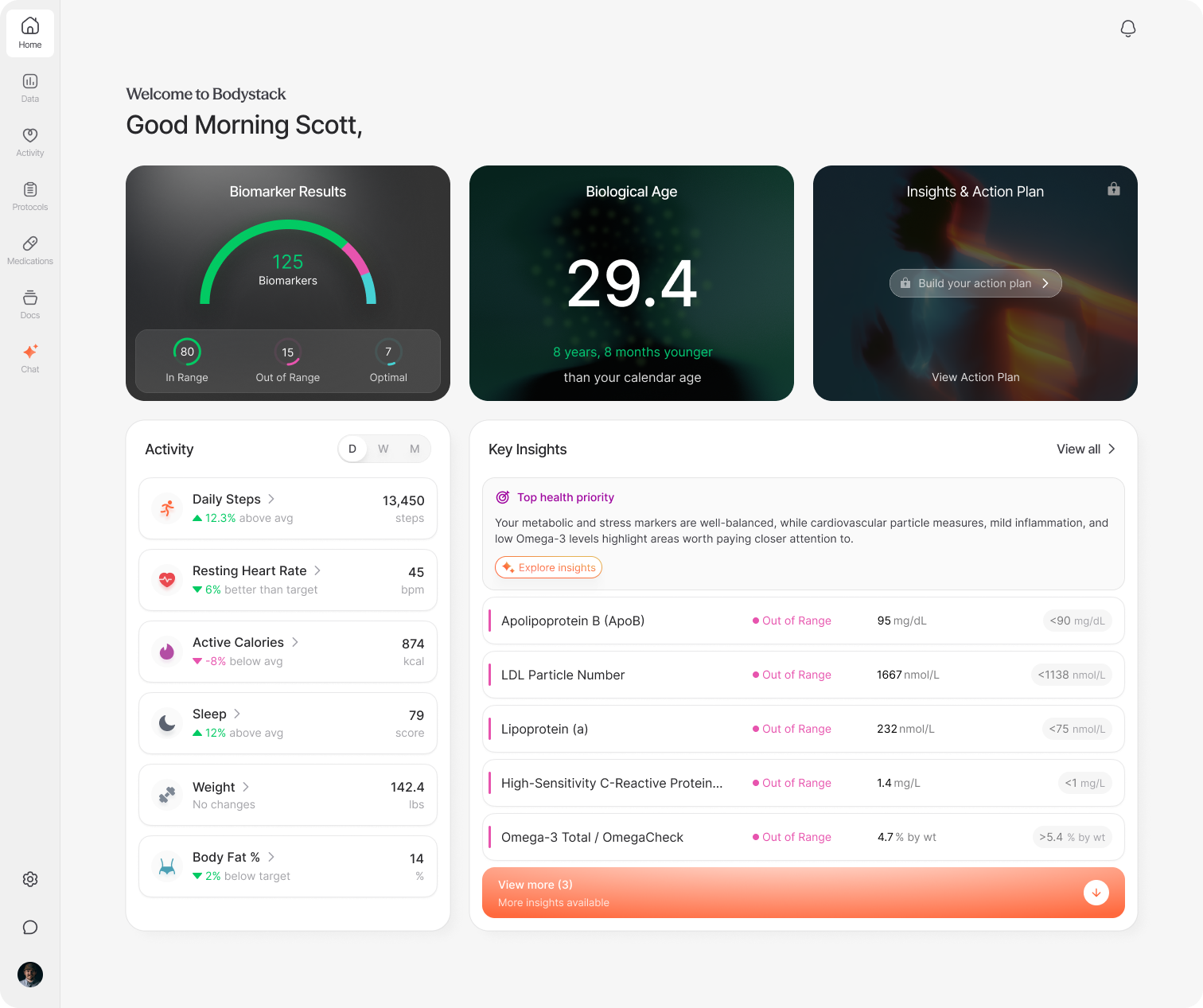
Try Bodystack and start tracking your biomarkers today.
What's Next
If you've read this far, something probably resonated.
Maybe you're a founder running on caffeine and a dream.
Maybe you've gotten blood work back, stared at a wall of numbers you didn't understand, and filed it away.
Maybe you have a family history that sits in the back of your mind.
I was all three.
Here's what I'm going to do: keep sharing.
The protocols I'm running. The tests I'm taking and why. The things that work, the things that don't, and the mistakes I make along the way.
If you want to see how this fits into the bigger picture, check out my 2025 year in review where health became a major theme, or my 2026 goals where I've set specific health targets I'm tracking publicly.
As I build Bodystack, the tool I wish existed when I first got my results, I'll be sharing the journey of building out the tool and how I'm using it to better understand my health moving forward.
One last thing:
Get the data. Understand it. Do something with it.
I wish I'd started at 27 instead of 37. But I'm glad I didn't wait until 47.
Bodystack is the tool I built to track biomarkers, understand what they mean, and create action plans based on your specific results. It's the dashboard I wish I had when I first got my blood work back.